Magic Memory as Experience Design.
Narrative cards.
Ancient thought and Renaissance magic as a toolkit for designing experiences.
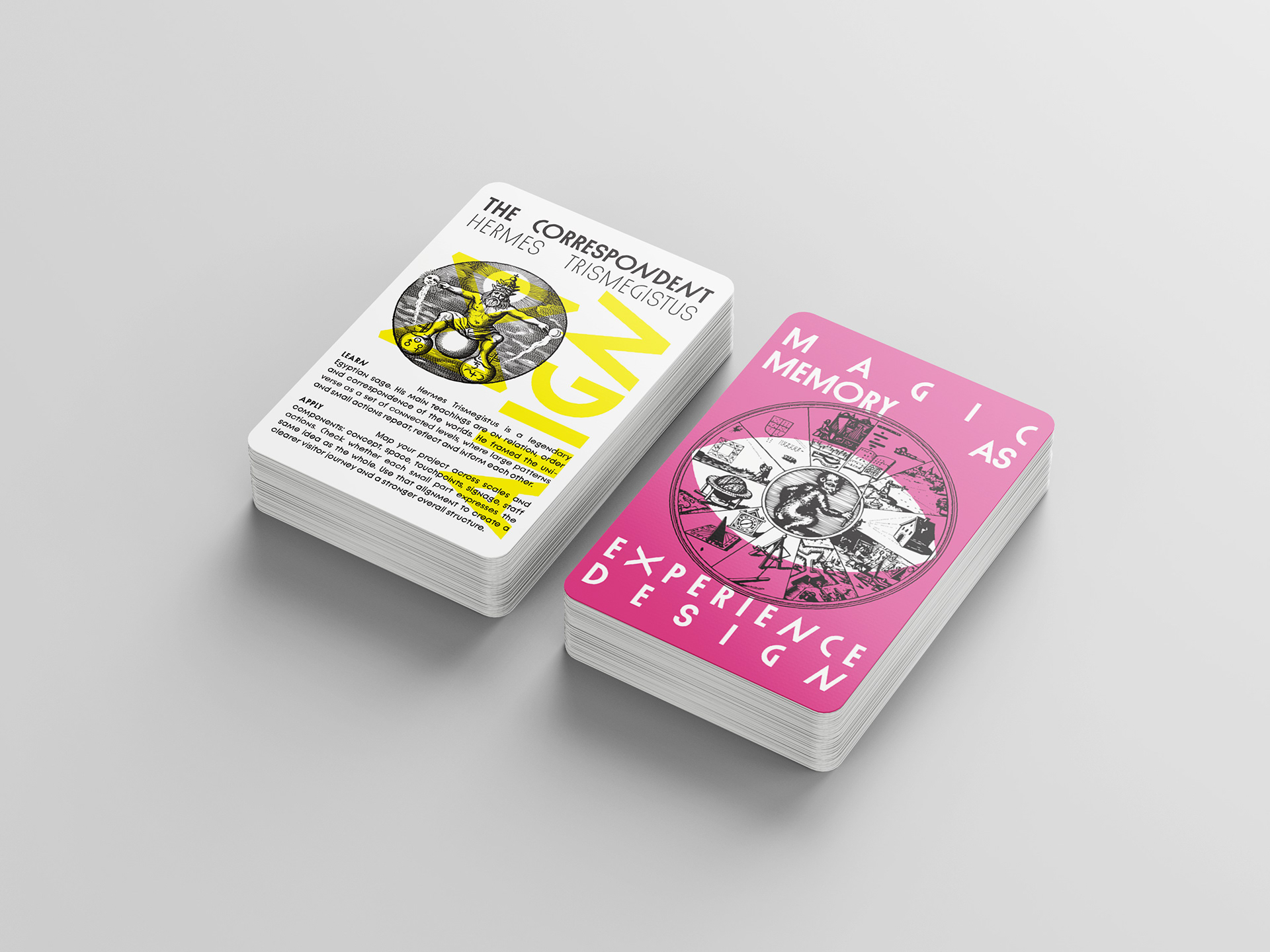
Magic Memory as Experience Design is a deck of cards that can be used to diagnose, shape or deepen an experiential project. It's a practical (yet fun) narrative tool for professionals who create, produce and operate experiences.
Purchase your deck here: magic-memory-as-experience.design.
36 cards for experience designers
Eight historical figures + four suits of spatial, temporal, symbolic and social tools.
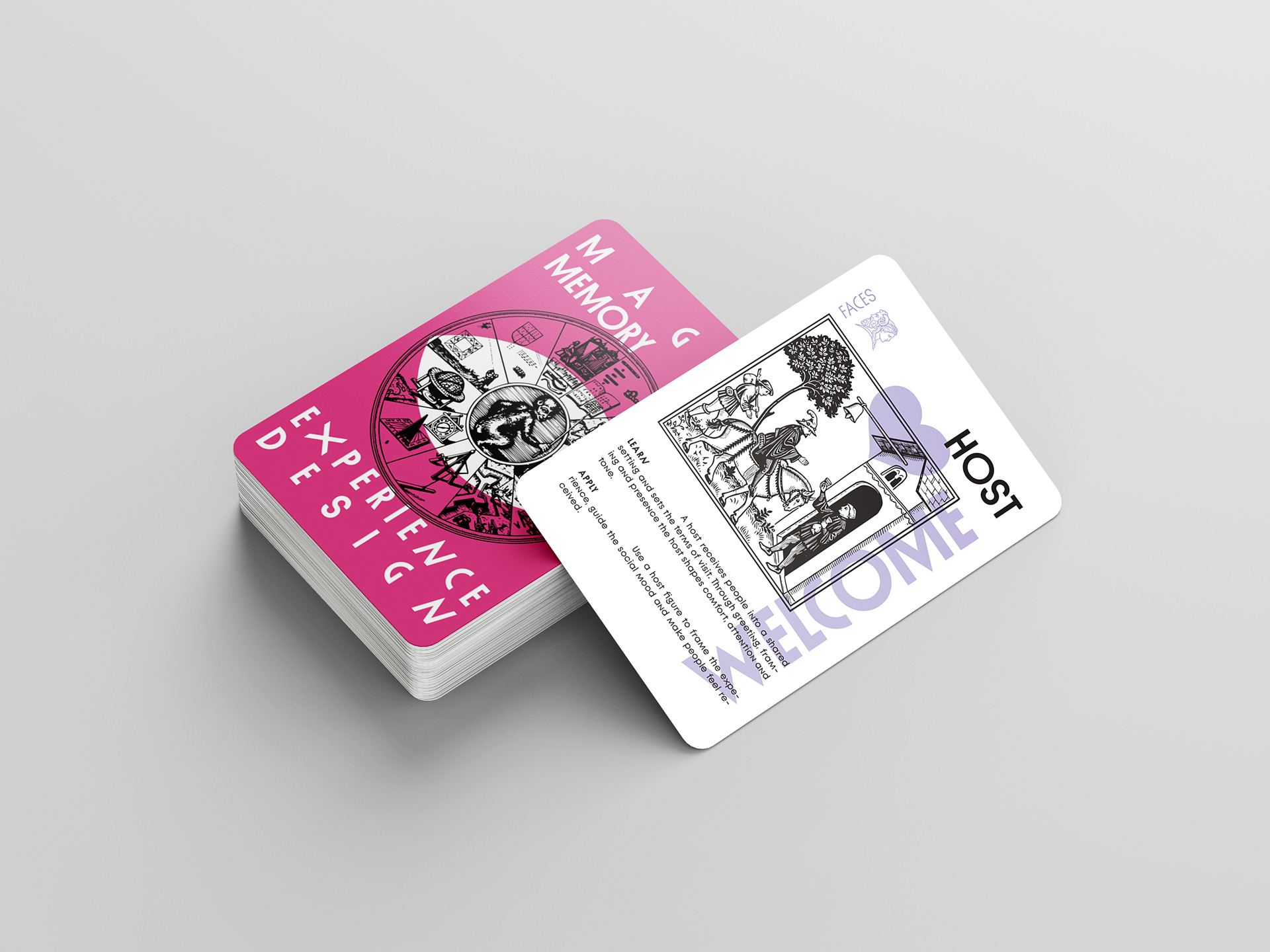
Each card combines a principle of Renaissance magic, alchemy and the art of memory with modern postulates of experience design, scenography and architecture. Drawn individually or in specific spreads, they provide a narrative toolkit for designing exhibitions, public spaces, events, performances and built environments.
Learn. Apply.
The idea
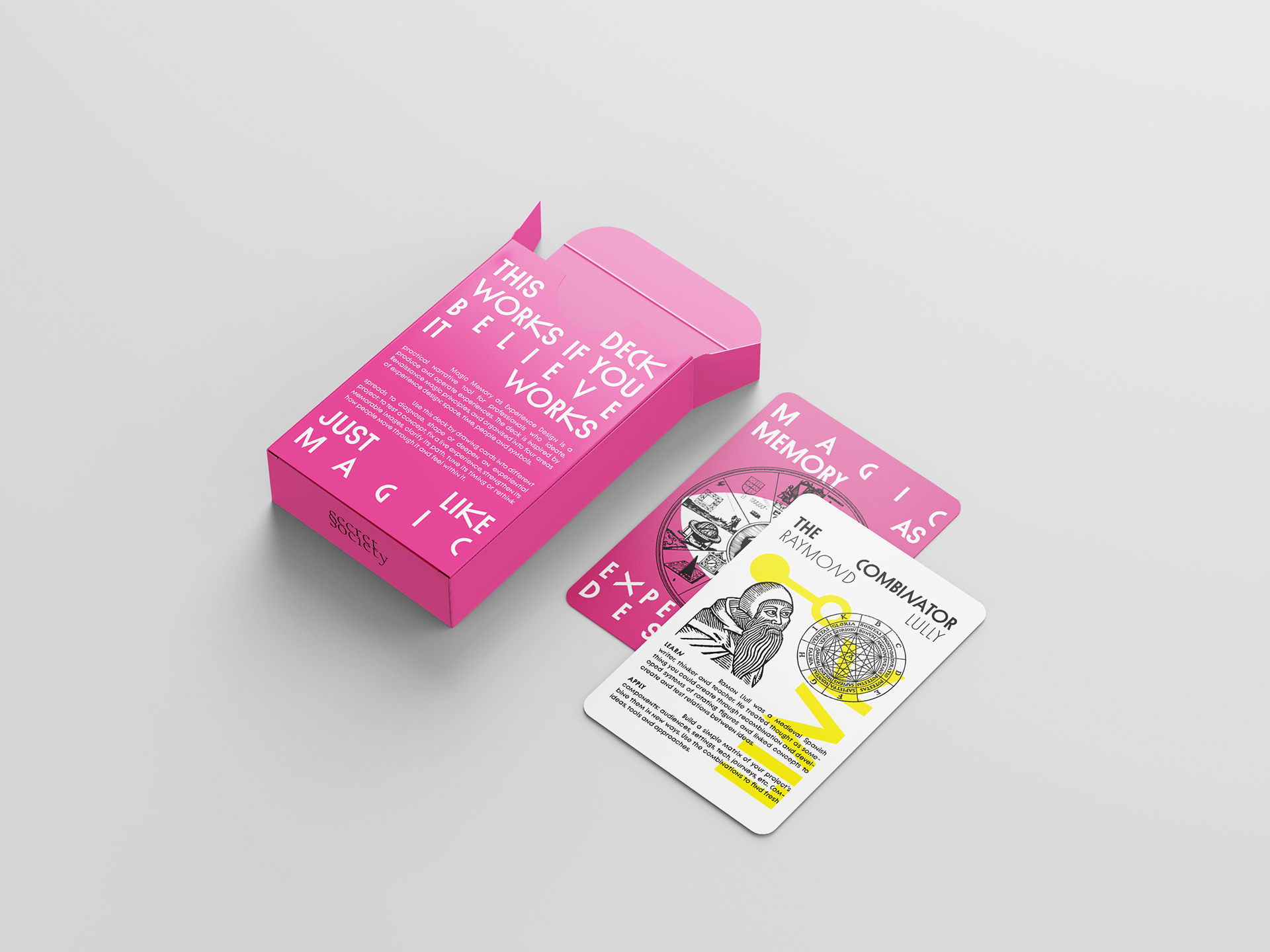
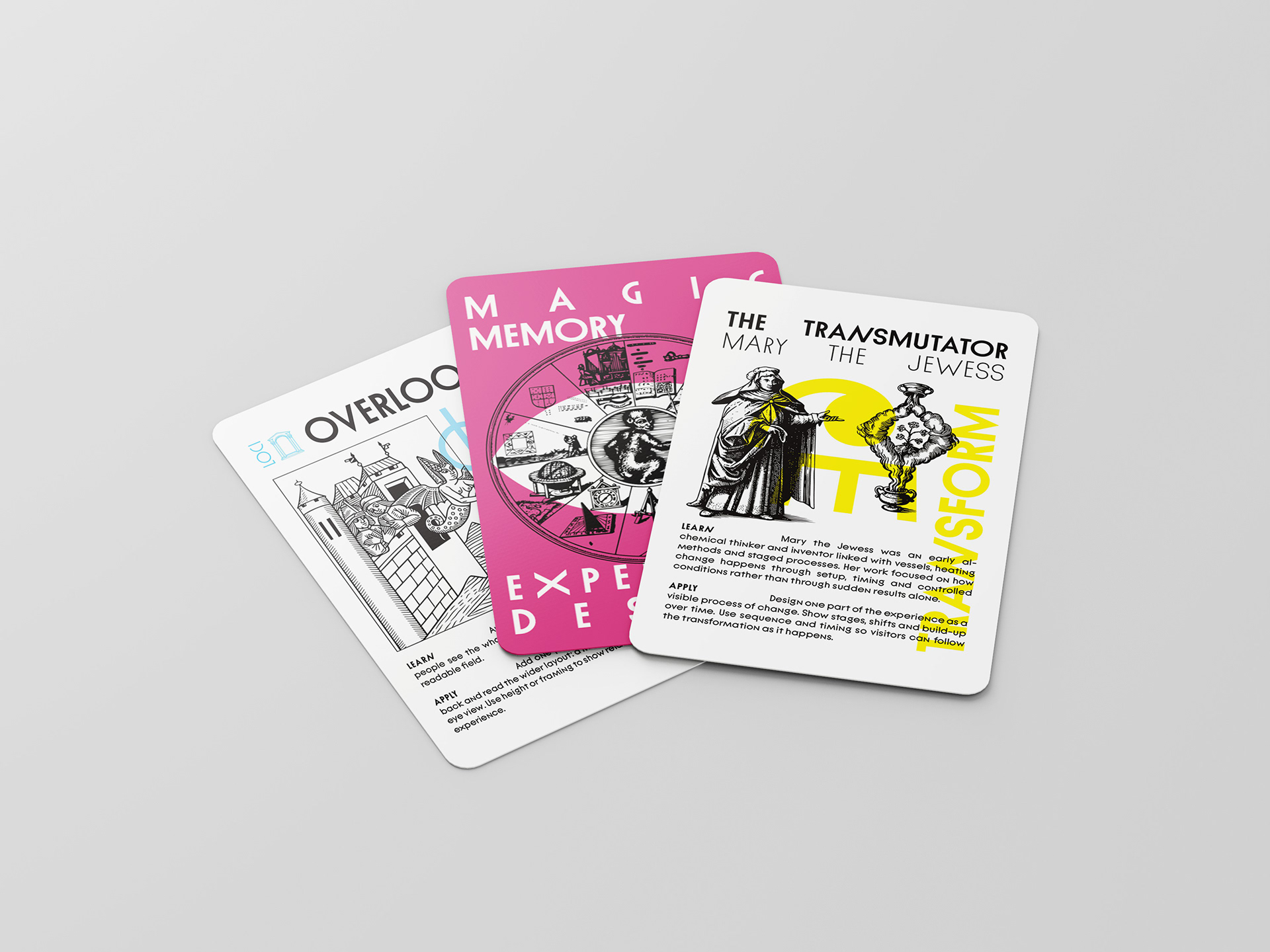
Every card in the deck follows the same two-part structure. Learn introduces a principle: a way of thinking about space, time, signs or people drawn from a historical figure or concept. Apply turns that principle into a concrete design action you can use in your current experience. Each card is short enough to read in a minute and specific enough to act on.
Majors and Minors
Inspiration
Major cards introduce the thinkers who shaped how Western culture organised knowledge, memory and perception, long before experience design had a name. Hermes Trismegistus on correspondence of ideas. Giulio Camillo on spatial arrangement of memory. Giordano Bruno on encoding impressions. Hildegard of Bingen on tone and immersion.
Minor cards, grouped into four suits (Loci, Seals, Hours and Faces), blend ancient, medieval and Renaissance practices with contemporary approaches of experiential design into simple, useful techniques to shape space, signs, time and people within an experience.
The Debugging Spread
Using the deck: example
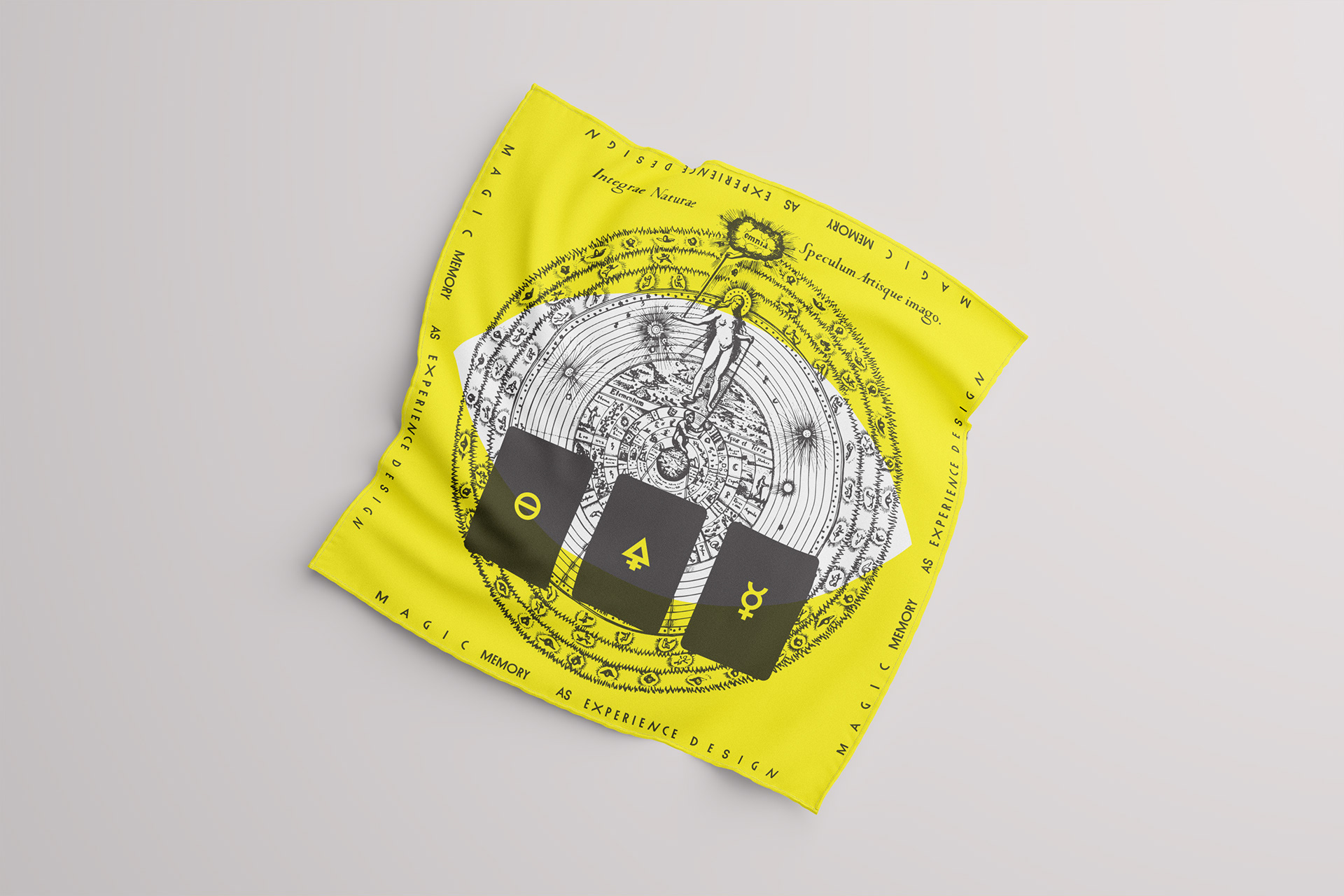
A compact diagnostic reading based on Galenic medicine principles of Greco-Roman origin, for an experience that does not quite work. Three cards are drawn into three positions: Salt (symptom), Sulphur (cause), Mercury (remedy). Each position asks a different question about what has gone wrong and what might heal it.
This deck works if you believe it works.
Just like magic.
Credits
Concept, content and creative direction: Secret Society
Art direction: Designpunkt
Typeface: Kraft Mono by reno giuliano
Magic Memory as Experience Design reading list: Link
Footnotes
— The deck is currently available upon personal request only.
— Interpretation services are extra.
— Digital IaaS (Interpretation as a Service) is in the works.